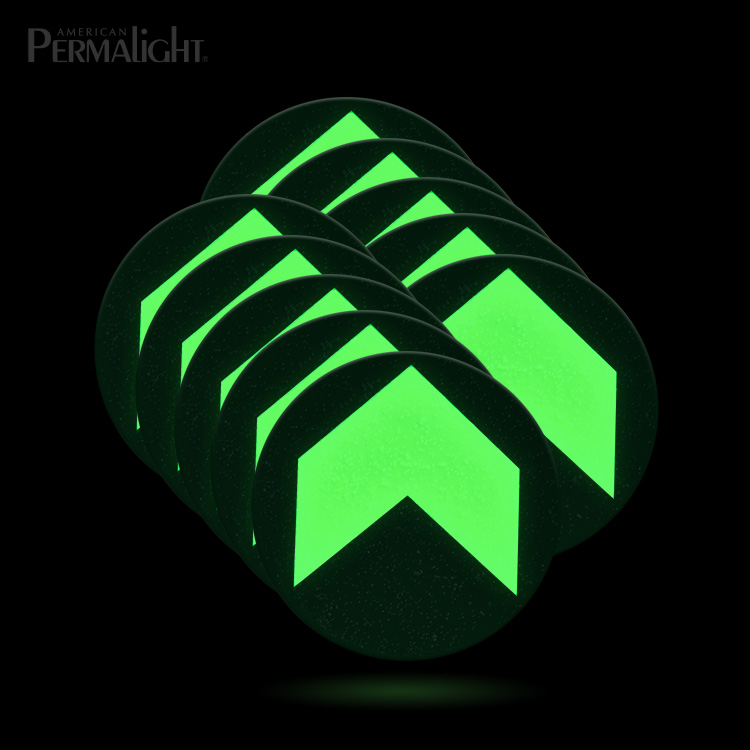




Large Chevron Anti-Skid Dots, Green with Photoluminescent Chevron, Polycarbonate, Pack of 10 (4 in/10 cm Diameter) are durable floor safety markers designed to add slip-resistant traction and clear directional guidance on smooth indoor flooring. Each dot features a green base with a glow-in-the-dark (photoluminescent/luminous) chevron and an anti-skid surface to help reduce slips, improve route visibility, and support safer movement in industrial and commercial environments.
These dots are especially useful in warehouses, factories, workshops, and high-traffic service areas where workers move quickly, equipment passes frequently, and floor conditions can change. Because the chevron provides directional cues, you can also use them for organized routing—such as guiding foot traffic along designated walkways, indicating the safe direction of travel, or reinforcing exit-route flow.
Large Chevron Anti-Skid Dots Product Overview
This product is a set of 4-inch diameter anti-skid floor dots supplied in a pack of 10. They are designed for placement on smooth indoor surfaces where additional traction and visual guidance are beneficial. The photoluminescent chevron can charge under normal lighting and remain visible in darkness, which supports wayfinding and route awareness during low-light situations.
Because the dots are modular, you can purchase multiple packs to extend coverage across longer routes—such as warehouse aisles, production-floor walkways, loading-area approaches, or corridor pathways where extra traction and visual reinforcement reduce risk.
Quick Specs
- Type: Anti-skid floor dots with directional chevron
- Color: Green base with photoluminescent chevron
- Diameter: 4 in/10 cm
- Pack size: 10 dots per pack
- Material: Polycarbonate (per product title/spec)
- Use area: Smooth indoor flooring
Key Benefits (Why They’re Effective)
- Slip-resistance: Anti-skid surface improves traction on smooth floors.
- Directional guidance: Chevron graphic supports route direction and flow.
- Low-light visibility: Photoluminescent chevron helps recognition when lighting is reduced (charging conditions apply).
- Modular coverage: Use single dots for hazard points or multiple packs for long pathways.
- Industrial-ready durability: Designed for demanding environments and frequent use.
- Easy route organization: Helps define walkways, keep zones separated, and guide movement.
Where to Use Them (Typical Applications)
These anti-skid chevron dots are commonly used in:
- Warehouses: Aisles, pick/pack zones, pedestrian walkways, and cross-aisle junctions.
- Factories & production floors: Safe walking lanes, equipment approach areas, and work-cell pathways.
- Loading and staging areas: Defined lanes to reduce slip risk near busy operational zones.
- Indoor corridors and service routes: Where extra traction and direction guidance improve safety.
- Maintenance routes: Marking a safer path to critical equipment rooms or inspection points.
Practical tip: Use the chevron direction to reinforce one-way movement in narrow aisles or to guide pedestrians away from vehicle paths. Visual routing reduces confusion and supports safer flow.
How Many Packs Do You Need?
Because each pack includes 10 dots, planning the spacing helps you estimate quantity:
- Hazard-point marking: Use 1–3 dots to highlight a slippery spot or approach zone.
- Short pathway: Use a full pack for a short corridor section or a defined crossing.
- Long routes: Purchase multiple packs to create continuous guidance along aisles and walkways.
For consistent visual rhythm, place dots at regular intervals (based on your site’s layout, sightlines, and traffic speed). Shorter spacing improves continuous guidance in high-speed or high-traffic areas.
Installation Notes (Best Practice)
These dots are intended for smooth indoor flooring. Proper surface preparation is essential for performance, especially in industrial environments where dust and oils are common.
- Clean the floor: Remove dust, debris, oils, and residue from the installation area.
- Dry completely: Ensure no moisture remains on the surface.
- Plan the layout: Align chevrons in the intended direction of travel.
- Apply firmly: Press down evenly to ensure full contact across the dot surface.
- Check edges: Confirm edges are fully seated to reduce lifting risk.
Common Mistakes to Avoid
- Installing on dusty, oily, or damp floors (reduces bonding and stability).
- Inconsistent chevron direction that confuses routing.
- Placing dots on heavily textured/uneven surfaces (performance may vary).
- Using dots as a substitute for cleaning wet floors (they help traction, not eliminate hazards).
Low-Light Visibility (Photoluminescent Notes)
Photoluminescent markings charge under normal ambient lighting and become visible in darkness. Performance depends on light exposure, charging duration, and the level of darkness. For best results, install where the dots receive regular facility lighting during standard operations.
If your project requires specific glow performance targets, align product selection and placement with your safety plan and any relevant site requirements. Combining glow floor markers with consistent exit-route signage can strengthen overall wayfinding.
Maintenance & Operational Use
To keep floor markers effective over time:
- Maintain regular cleaning to reduce dust build-up that can reduce traction.
- Inspect periodically in high-traffic areas and replace damaged dots when needed.
- Avoid harsh abrasive cleaning methods that could wear the surface prematurely.
Helpful External Resources
For general workplace safety guidance, you may reference:
- OSHA – Slips, Trips, and Falls
- NFPA – Codes & Standards
- ISO – Safety Signs (ISO 7010 reference page)
FAQ
1) What size are the dots?
Each dot is 4 inches in diameter.
2) How many dots come in a pack?
Each pack includes 10 dots. You can purchase multiple packs to cover longer routes.
3) Where should I install them?
They are intended for smooth indoor floors in areas like warehouses, factories, corridors, and designated walkways.
4) Do they help in low light?
The chevron is photoluminescent (glow-in-the-dark). Visibility depends on charging conditions and ambient lighting exposure.
5) Will these prevent all slips?
They provide additional traction and visibility to reduce risk, but good housekeeping and hazard control practices remain important.
6) How do I plan spacing?
Use closer spacing for high-traffic or fast-movement areas, and consistent spacing to maintain clear route guidance.