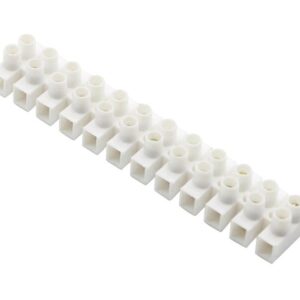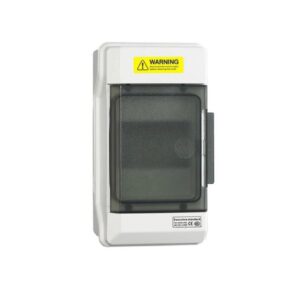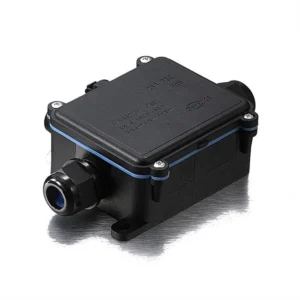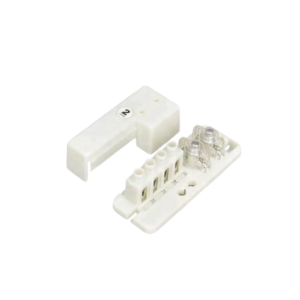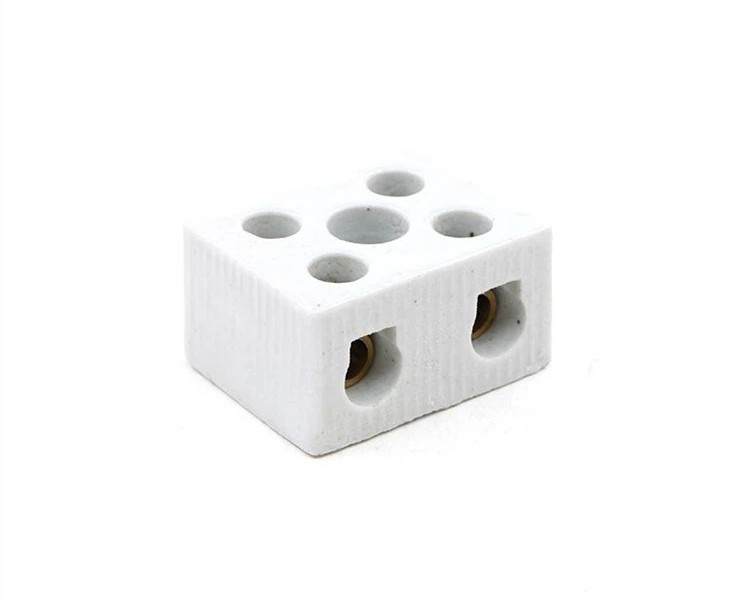


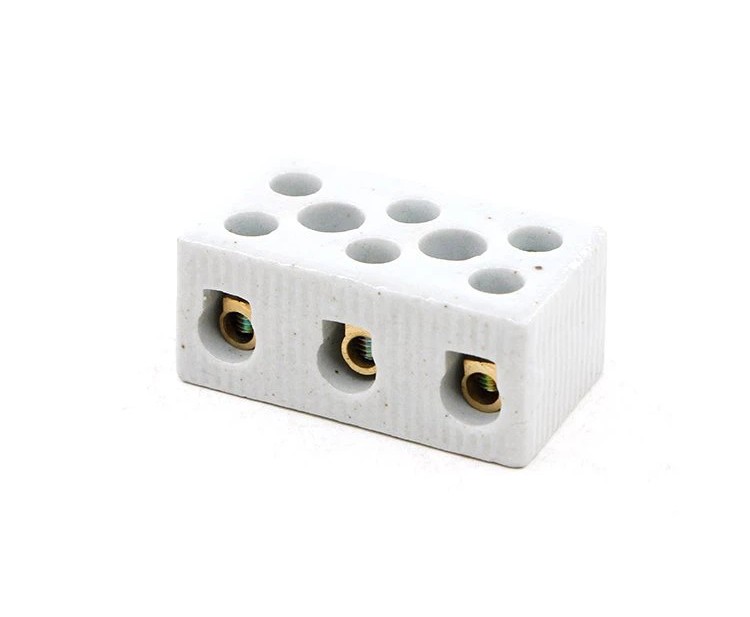
Ceramic Connector Block – High-Temperature Terminal Block
The Ceramic Connector Block is a heat-resistant electrical connection component designed for safe cable joining and termination in high-temperature environments. Unlike standard plastic terminal blocks, this connector uses a ceramic (porcelain or steatite) insulated body that withstands elevated temperatures without softening, deforming, or degrading. This construction makes the Ceramic Connector Block suitable for applications such as lighting fixtures, heating elements, electric ovens, cookers, high-wattage lamps, industrial heaters, and other junction points exposed to heat.
Inside the ceramic body, the connector block contains metal conductor inserts (commonly brass), combined with screw-clamp terminals that tightly secure wire ends. This design ensures stable electrical contact with low resistance while maintaining strong mechanical retention of the conductors. The block layout also provides separated cable channels that help reduce the risk of electrical arcing and improve operational safety in heat-exposed environments.
Because of its durable ceramic insulation and reliable screw-clamping mechanism, the Ceramic Connector Block is commonly used where standard plastic connectors may fail due to temperature exposure. The ceramic material maintains its electrical insulation properties even in demanding conditions, ensuring safe and reliable electrical connections over extended periods of operation.
Product Range (Ratings & Poles)
Ceramic connector blocks are available in multiple current ratings and pole (slot) counts to match different loads and wiring sizes.
Current Rating Range (Series Options)
- 10A / 15A / 20A / 25A / 30A / 40A / 50A / 60A
(Availability depends on the specific series and manufacturer.)
Pole / Slot Options
- 1-Pole (Single slot)
- 2-Pole
- 3-Pole
(Some series also offer 4-pole and multi-pole strips, depending on supplier.)
This variety allows installers to select the correct connector for both electrical load and number of conductors required at the junction point.
Key Benefits of Ceramic Connector Block
- High heat resistance: Suitable for hot zones where plastic connectors may soften, deform, or fail.
- Strong electrical insulation: Ceramic provides excellent dielectric strength and stability under heat.
- Reliable screw clamping: Brass inserts and screw terminals secure conductors firmly to reduce loose connections.
- Maintenance friendly: Connections can be inspected and re-tightened during servicing.
- Widely used component: Commonly installed in luminaires, heaters, ovens, and high-power appliances.
The combination of ceramic insulation and metal screw terminals makes the Ceramic Connector Block particularly effective in installations where stable electrical connections must be maintained in the presence of heat or thermal cycling.
Typical Applications
- Lamp holders and internal luminaire wiring (especially high-wattage fixtures)
- Electric ovens, cookers, and heating appliances
- Heating elements and heat-exposed electrical components
- Industrial equipment junction points exposed to elevated temperatures
- Floodlights and heat-exposed wiring compartments
- Replacement of damaged or burnt plastic connector blocks
In many lighting and heating installations, the Ceramic Connector Block is used as a reliable junction point that maintains electrical integrity even when surrounding components generate heat.
Technical Information (Typical / Series-Dependent)
Technical ratings vary by model and manufacturer. Always verify exact values from product markings or official datasheets before installation.
Construction & Materials
- Body material: High-temperature ceramic (porcelain or steatite type)
- Terminal material: Brass conductor inserts (common) / plated metal (series dependent)
- Screws: Steel screws (often zinc-plated), corrosion-resistant options depending on series
- Insulation properties: High dielectric strength and stable insulation under heat
Electrical Ratings (Typical Range)
- Rated voltage: commonly up to 400V AC (some series rated higher depending on design)
- Rated current: 10A to 60A depending on model
- Contact type: Screw-clamp terminals (mechanical compression)
- Connection stability: Low resistance electrical path with strong conductor retention
Conductor Compatibility (Typical / Depends on Size)
- Wire type: Solid or stranded copper conductors
- Conductor cross-section (typical):
- Smaller blocks: ~0.5–2.5 mm²
- Medium blocks: ~1.5–6 mm²
- Larger blocks: up to ~10 mm² (and higher in heavy-duty 50–60A versions depending on design)
- Stripping length: typically defined by model (ensure correct strip length for full clamp engagement)
Thermal / Operating Conditions
- Operating temperature: suitable for high-temperature environments (depends on ceramic grade and terminal design)
- Thermal cycling resistance: ceramic body remains stable during repeated heating/cooling cycles
- Environment: typically indoor dry locations, often inside fixtures/appliances where heat is present
(Use only as specified—exposure to water/chemical washdowns depends on the complete enclosure and application.)
Mechanical / Installation
- Mounting format: compact block suitable for fixture or appliance wiring compartments
- Pole identification: single/dual/triple pole options
- Serviceability: re-tightenable screw terminals for maintenance inspections
Selection Notes (Practical Guide)
- Choose current rating based on actual load, with proper safety margin and compliance to local electrical standards.
- Match the connector size to the wire cross-section to ensure strong clamping and avoid overheating.
- Ensure terminals are tightened to the correct torque (if specified) to reduce hot spots from loose connections.
For additional information about electrical connector safety standards and insulation materials, refer to
International Electrotechnical Commission (IEC)
or consult installation guidelines provided by the
Electrical Installation Guide.