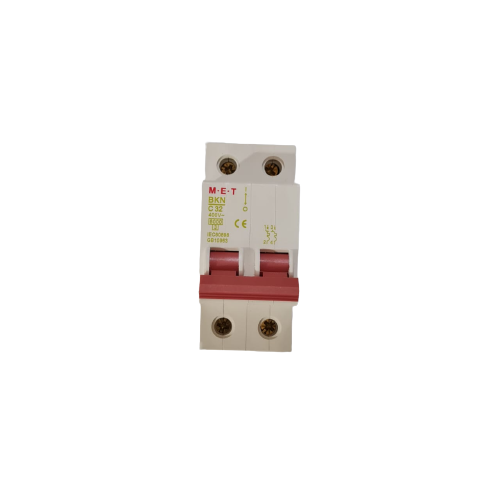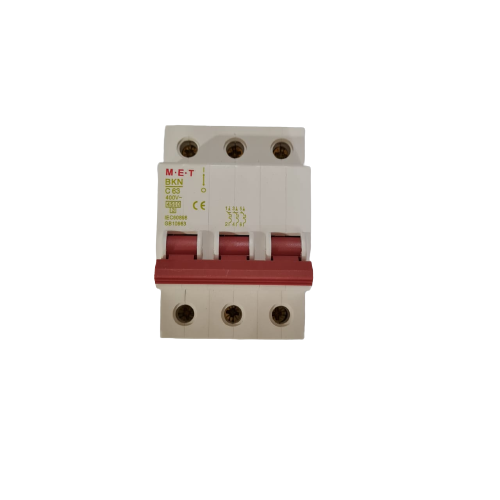


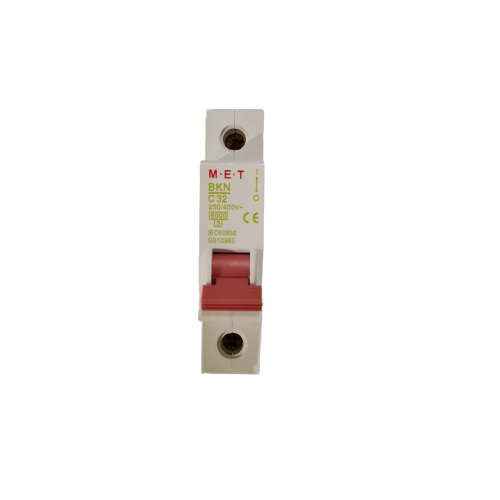
1) Circuit Protection Devices: MCB – Miniature Circuit Breaker (Overload + Short Circuit)
What Circuit Protection Devices of type MCB protect against
MCBs provide overcurrent protection, meaning they trip during:
- Overload (excess current over time that can overheat cables)
- Short circuit (high fault current that can cause severe damage/fire)
How MCB Circuit Protection Devices work
- Thermal trip for overload (bimetal element reacts to heating)
- Magnetic trip for short circuits (instant trip at very high current)
Typical applications for MCB Circuit Protection Devices
- Lighting circuits
- Socket-outlet circuits (with correct rating and cable sizing)
- Dedicated circuits for water heaters, ovens, AC units (where leakage protection is handled separately)
- Small motors and pumps (with correct trip curve selection)
- Outdoor feeders and signage circuits (with proper enclosure/IP protection)
Common electrical parameters for MCB Circuit Protection Devices (typical / model-dependent)
- Rated voltage: typically 230/400V AC (single-phase / three-phase systems)
- Frequency: 50/60 Hz
- Poles: 1P / 2P / 3P / 4P (depending on system)
- Rated current (In): common ranges 6A–63A (higher values exist by series)
- Trip curve: B / C / D
- B-curve: sensitive, for resistive loads (lighting, heaters)
- C-curve: general purpose, tolerates moderate inrush (most building loads)
- D-curve: high inrush (motors/transformers – specialist selection)
- Breaking capacity (Icn): commonly 6kA / 10kA (depends on model and installation fault level)
- Standards (common): IEC 60898-1 (typical for household), IEC 60947-2 (industrial series)
2) Circuit Protection Devices: RCCB – Residual Current Circuit Breaker (Earth Leakage / Shock Protection)
What Circuit Protection Devices of type RCCB protect against
RCCB protects people and property by detecting earth leakage current and tripping when leakage exceeds a set threshold. It helps protect against:
- Electric shock (touching live parts or faulty appliances)
- Fire risk from leakage currents through insulation faults
Important: RCCB does NOT protect against overload or short circuit.
It must be used together with MCBs (or upstream fuse/MCB protection).
Typical applications for RCCB Circuit Protection Devices
- Whole-board or group protection for multiple circuits
- Bathrooms, kitchens, outdoor circuits, and wet areas
- Circuits with portable appliances or higher shock risk
- Equipment prone to insulation leakage (water heaters, washing areas, pumps)
- Commercial areas where additional personnel safety is required
Common electrical parameters for RCCB Circuit Protection Devices (typical / model-dependent)
- Rated voltage: typically 230/400V AC
- Frequency: 50/60 Hz
- Poles: 2P (single-phase) or 4P (three-phase)
- Rated current (In): often 25A / 40A / 63A / 80A / 100A (acts as maximum continuous current, not overload protection)
- Residual trip sensitivity (IΔn):
- 30 mA: personal shock protection (most common for final circuits)
- 100 mA / 300 mA: fire protection / upstream selectivity (often used at incomer level)
- Type: AC / A / F / B
- Type AC: basic sinusoidal leakage (less used in modern electronics-heavy sites)
- Type A: handles pulsating DC leakage (recommended for most modern loads)
- Type F/B: for specialized loads (VFDs, EV chargers, PV inverters—requires correct engineering selection)
- Standards (common): IEC 61008-1
3) Circuit Protection Devices: RCBO – Residual Current Breaker with Overcurrent (Full Protection in One Device)
What Circuit Protection Devices of type RCBO protect against
RCBO combines:
- MCB protection: overload + short circuit
- RCCB protection: earth leakage (shock/fire protection)
Why RCBO Circuit Protection Devices are used
RCBO provides full protection per circuit, with better fault isolation. If one circuit has leakage, only that RCBO trips—rather than shutting down a whole group protected by one RCCB. This reduces nuisance trips and improves uptime.
Typical applications for RCBO Circuit Protection Devices
- Final circuits that require individual leakage protection (best practice)
- Circuits feeding critical loads: servers, security systems, medical/clinic rooms, refrigeration
- Outdoor circuits, wet areas, and pumps
- High-end residential boards where selective tripping is preferred
- Commercial sites where minimizing downtime matters
Common electrical parameters for RCBO Circuit Protection Devices (typical / model-dependent)
- Rated voltage: typically 230V AC (1P+N) or 230/400V AC (multi-pole versions)
- Frequency: 50/60 Hz
- Poles: common 1P+N, also 2P / 3P+N / 4P depending on series
- Rated current (In): common 6A–63A
- Trip curve: typically B or C
- Residual trip sensitivity (IΔn): commonly 30 mA (also 100/300 mA for specific designs)
- Breaking capacity: commonly 6kA / 10kA
- Standards (common): IEC 61009-1
Quick Selection Guidance for Circuit Protection Devices
- MCB only: when you need cable/equipment protection and leakage protection is handled elsewhere (or not required by design)
- RCCB + MCBs: economical solution for multiple circuits, but one leakage fault may trip several circuits together
- RCBO: best for individual circuit safety and better fault isolation, especially for outdoor, wet, or critical circuits
Typical Circuits Protected by Circuit Protection Devices
- Lighting circuits (indoor/outdoor)
- Socket outlets (general purpose and dedicated)
- HVAC and split AC circuits (as per design)
- Water heaters and boilers
- Pumps and small motors
- Outdoor feeders, signage, garden loads
- Sensitive equipment circuits (IT, controls, security)
External Reference Standards for Circuit Protection Devices
For standard reference only, you may review the following official IEC publications:
Important Note
Exact values (voltage rating, breaking capacity, curve, residual type, and certifications) vary by brand and model. For project approvals, always confirm the device label/datasheet and select ratings based on cable size, load current, fault level, earthing system, and local electrical code requirements.