


Last Updated: July 2026
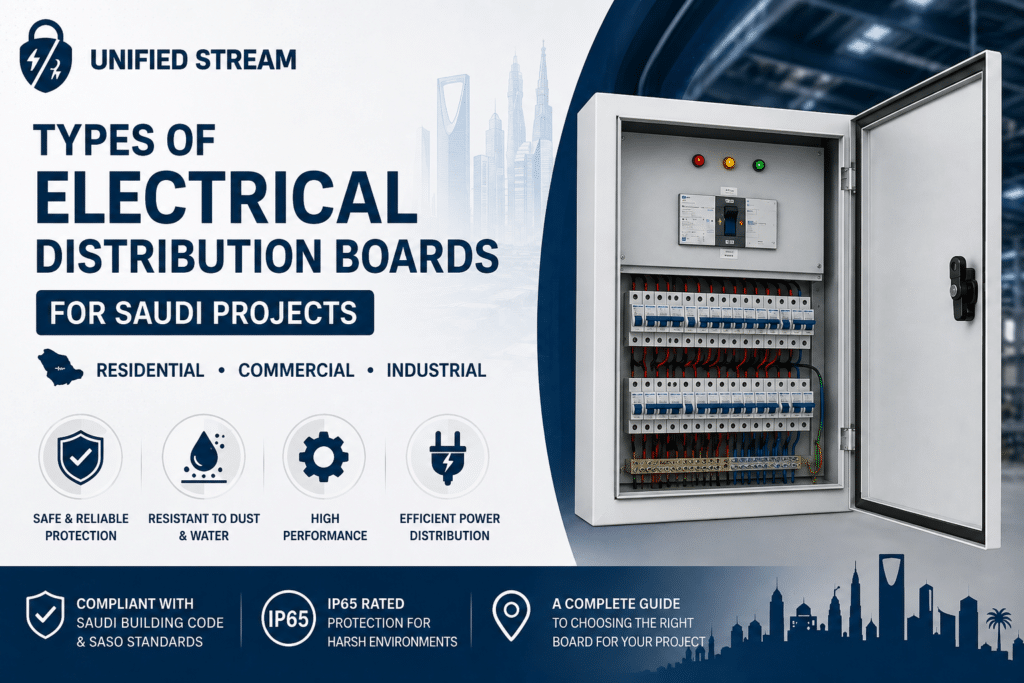
An electrical distribution board (panel board) is considered the beating heart of any electrical system. In Saudi projects, the choice of distribution boards varies based on the installation location, the number of lines, and the required level of protection against dust and water to ensure operational continuity and building safety.
Quick Answer
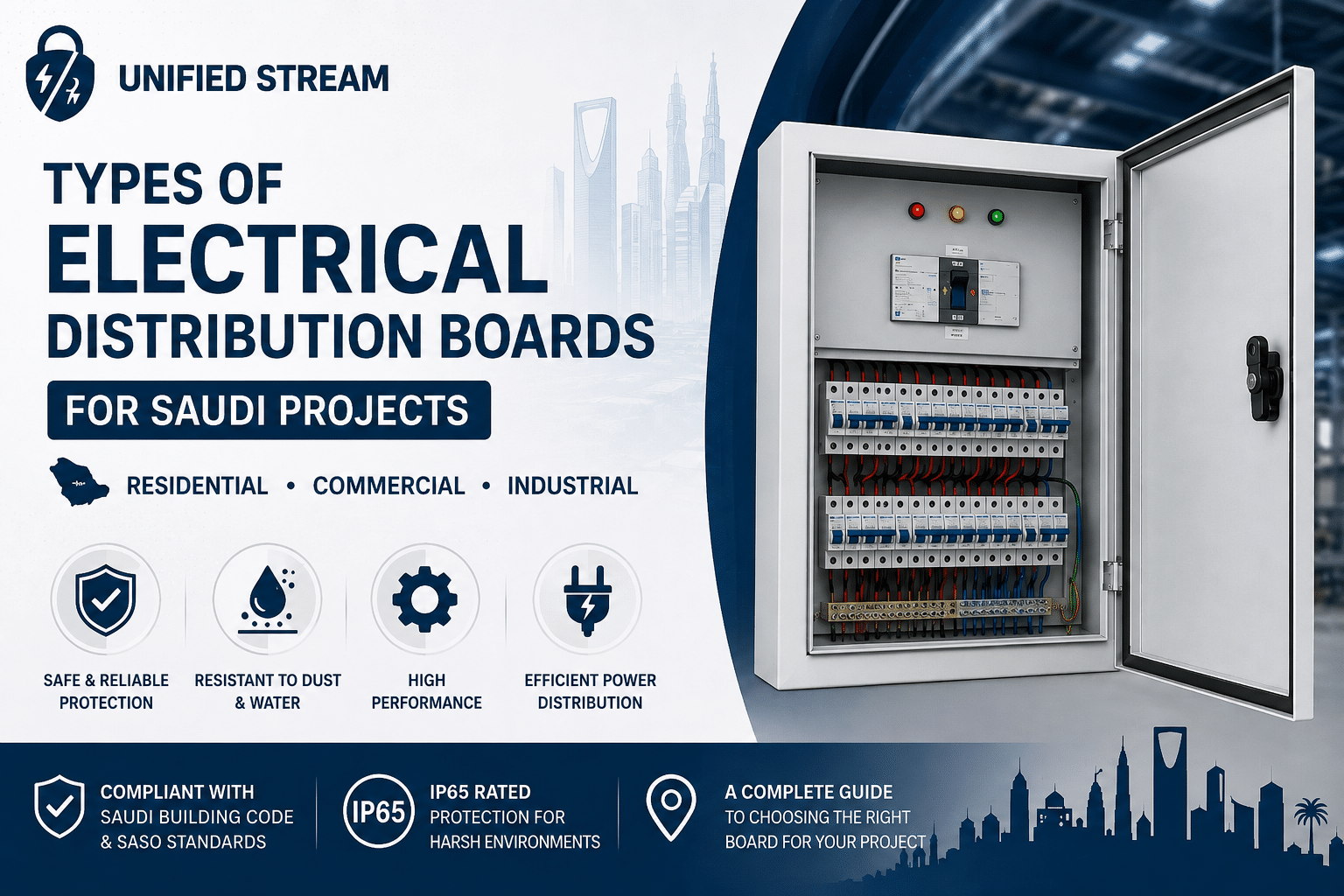
Distribution boards vary by application into Main Distribution Boards (MDB) and Sub Distribution Boards (SDB). By installation method, they are categorized into flush-mounted (recessed) and surface-mounted boards. For outdoor projects, an electrical distribution board with an IP65 rating or higher must be selected to withstand harsh weather conditions, whereas IP40 protection is sufficient for indoor use.
A single type of distribution board cannot be used across all applications. The requirements for a residential villa differ radically from those of a factory, hospital, or street lighting project. In this guide, we will explore the different types and how to select the most appropriate one according to project specifications.
What is an Electrical Distribution Board?
A distribution board, commonly known as an electrical panel, is a metallic or plastic enclosure used to distribute electrical power from the main source to various sub-circuits within a building.
The board contains essential protection components such as Miniature Circuit Breakers (MCB) and earth leakage circuit breakers (RCCB and RCBO) to protect cables, appliances, and individuals from the hazards of overloads or electrical short circuits.
Types of Distribution Boards by Installation Method
The installation method of an electrical distribution board varies based on the building's architectural design and the construction phase:
1. Flush Mounted Distribution Boards
This type is installed inside the wall, leaving only the front cover visible. It is highly preferred in villas, residential apartments, and offices to maintain aesthetic appeal and interior decor.
2. Surface Mounted Distribution Boards
These are fixed directly onto the surface of an exterior wall. They are typically used in factories, warehouses, parking lots, and facilities where walls are not prepped for recessing, or where continuous modifications to the wiring are required.
Types of Distribution Boards by Application
| Panel Type | Abbreviation | Primary Function and Use |
|---|---|---|
| Main Distribution Board | MDB | Receives electricity from the utility transformer and distributes it to sub-boards. Used in complexes and factories. |
| Sub Distribution Board | SDB | Distributes electricity to final circuits (lighting, sockets). Used in apartments and retail shops. |
| Motor Control Center | MCC | Dedicated to controlling large pumps and motors in factories and water plants. |
| Outdoor Distribution Boxes | Weatherproof | Designed to withstand weather conditions (rain, dust). Used in gardens, street lighting, and parking lots. |
The Importance of IP Rating in Distribution Boards
To choose a suitable electrical distribution board, you must pay attention to the Ingress Protection (IP) rating, which determines the enclosure's resistance to solid objects (like dust) and liquids (like water).
- IP40 / IP41: Suitable for indoor distribution boards in dry corridors and rooms.
- IP55: Provides good protection against dust and water splashes; suitable for semi-exposed areas or factories.
- IP65: Fully protects against dust and resists strong water jets, making it the perfect choice for an outdoor electrical distribution board in exposed Saudi projects.
How to Choose a Distribution Board for Your Project in Saudi Arabia?
1. Determine the Number of Phases
Does the project rely on a single-phase (1-Phase) 230V system, or a three-phase (3-Phase) 400V system to operate central air conditioners or heavy loads?
2. Calculate the Panel Capacity (Number of Ways)
The electrical distribution board must accommodate all current protection breakers while leaving a spare capacity of 20% to 30% for future expansions.
3. Manufacturing Material
Metal (sheet steel) boards are highly durable and used for large panels and industrial environments, while fire-resistant plastic (polycarbonate) boards are preferred for residential applications.
Looking for Distribution Boards Compliant with Saudi Standards?
Discover our wide range of plastic and metal distribution enclosures, whether for indoor or outdoor use (IP65), to secure your project with the highest quality standards.
Browse Distribution Boards & BreakersCommon Installation Mistakes
- Ignoring Thermal Insulation: Installing an outdoor metal board exposed to direct sunlight without a canopy, which raises the internal breakers' temperature.
- Wire Congestion: Cramming a large amount of cables inside a small-sized electrical distribution board, preventing ventilation and causing overheating.
- Using the Wrong IP Rating: Installing an IP40 distribution box in a wet or outdoor area, leading to component failure over time.
- Neglecting Earthing: Failing to connect the metallic board enclosure to the earthing system, posing a severe electric shock hazard.
Final Verdict
Choosing the right electrical distribution board is the foundation of a reliable protection system. For residential projects, focus on aesthetically pleasing flush-mounted boards with ample space for circuit breakers.
For commercial, industrial, and outdoor projects in Saudi Arabia, selecting weather-resistant metal or plastic distribution enclosures with an IP65 rating or higher is an indispensable decision to ensure business continuity and avoid exorbitant maintenance costs.
Frequently Asked Questions
What is the best electrical distribution board for homes?
The best electrical distribution board for homes is a flush-mounted board made of fire-resistant plastic or insulated metal. Ensure it has enough ways to cover lighting, sockets, and ACs, and is compatible with earth leakage protection breakers.
What is the difference between a Main Distribution Board (MDB) and a Sub Distribution Board (SDB)?
The Main Distribution Board (MDB) receives the main cable from the power grid or transformer and contains the main breaker. The Sub Distribution Board (SDB) gets its power from the MDB and distributes the current directly to appliances or rooms.
Can an indoor distribution board be used outdoors?
This is absolutely not recommended. Indoor boards (usually IP40) are not sealed against water or dust. Using them outdoors will expose the circuits to damage and create a short circuit hazard. An IP65-rated distribution box must be used for outdoor areas.
How do I calculate the right distribution board size for my project?
Calculate the total number of electrical circuits (lighting, sockets, ACs, water heaters), then add 20% to 30% as spare space. For instance, if you have 18 circuits, it is highly recommended to buy a 24-way distribution board.
